

Situation Report of Clinical and Climatic Pattern Changes in Dengue Outbreaks in Bangladesh 2024–2025
-
Dr. Tanvir Hossain

-
Dr. Famous Uddin Chayan
-
Prof. Dr. Nikolaos Syrmos
Abstract
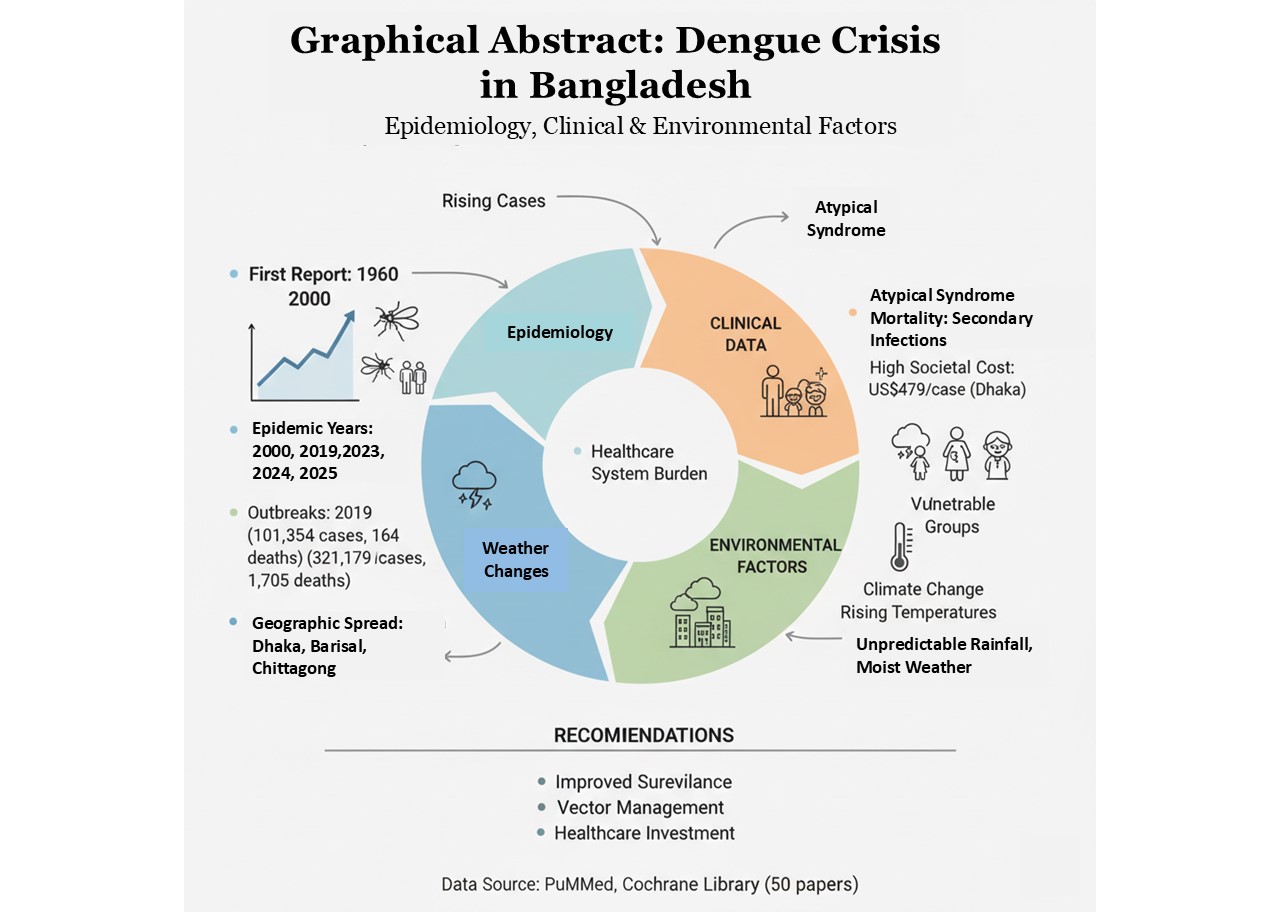
Dengue is still a big public health problem in Bangladesh, and the number of cases has risen rapidly in the last several years. This review integrates epidemiological, clinical, and environmental data to clarify the determinants contributing to the country's dengue crisis. A systematic literature search from 2001 to 2025 was carried out using PubMed and the Cochrane Library, resulting in 50 pertinent papers regarding dengue epidemiology, transmission dynamics, and health effects in Bangladesh. The first report of dengue was in 1960, and the first epidemic was in 2000. Dengue has since become endemic, with huge outbreaks in 2019 (101,354 cases; 164 deaths) and a terrible peak in 2023 (321,179 hospitalizations; 1,705 deaths). Aedes aegypti has had good reproduction conditions because of changing weather, rising temperatures, unpredictable rainfall, and fast, unplanned urbanization. Epidemiological changes encompass ongoing year-round transmission, an increase in secondary infections attributable to several serotypes, and a geographical spread from urban Dhaka to semi-urban and rural areas, including the Cox’s Bazar refugee camps. In clinical practice, patients are increasingly diagnosed with atypical or "expanded dengue syndrome," and mortality is closely linked to shock and subsequent infections. The expenses to society for each incidence are high, averaging US$479 in urban Dhaka. People who are more likely to get sick or have mental health problems are youngsters, pregnant women, and the elderly. Evidence shows that climate change and urbanization are working together to lengthen the dengue season, make epidemics worse, and put a load on Bangladesh's healthcare system. To lessen the growing threat, it is important to improve surveillance, vector management, and investment in healthcare resilience.
INTRODUCTION
A comprehensive knowledge of the pathophysiology and epidemiology of emerging diseases is vital for embarking research priorities and developing effective control and eradication techniques. The Flavivirus genus includes numerous notable human infections, including dengue virus (DENV), chikungunya virus (CHIKV), Zika virus (ZIKV), yellow fever virus (YFV), West Nile virus (WNV), and Japanese encephalitis virus, predominantly transmitted by Aedes aegypti and Aedes albopictus (Jamali et al., 2023). DENV continues to be the most prevalent worldwide. After 2020, dengue and nipah infection a new health burden to Bangladesh (Ahmed et al., 2023). Extensive research on dengue reveals that its endemic and sporadic outbreaks are significantly influenced by environmental factors, including geography, global warming, climate variability, irregular rainfall, and unplanned urbanization, which all promote the proliferation of the primary mosquito vector A. aegypti (Guzman et al., 2016). Endemic transmission is notably observed in the Eastern Mediterranean, the Americas, South-East Asia, the Western Pacific, and Africa, but intermittent local transmission has been recorded in Europe and the United States, where A. albopictus frequently cohabits with A. aegypti (Guzman & Harris, 2015).
Bangladesh has an exceptionally conducive habitat for A. aegypti (and occasionally A. albopictus), rendering it particularly susceptible to dengue outbreaks. In recent years, the nation has encountered grave and lethal outcomes from DENV infections, mostly influenced by climate variables (precipitation, humidity, and temperature) and fast, unregulated urbanization (Mahedi et al., 2024). The persistent increase in ambient temperature especially in Dhaka that has enlarged mosquito breeding environments, leading to a heightened occurrence of dengue. Dengue fever clinically manifests with an abrupt onset of high fever, severe headache, retro-orbital pain, and musculoskeletal pain. Dengue hemorrhagic fever (DHF), its most severe manifestation, is characterized by continuous bleeding, shock, and a risk of mortality, predominantly affecting youngsters (Islam et al., 2025). Hemorrhaging typically commences 3–5 days following the onset of fever, which persists for 5–6 days and frequently exhibits a biphasic pattern, resulting in significant weakness in patients. Similar to chikungunya, dengue can disseminate swiftly and impact extensive populations, resulting in elevated mortality rates. Data from the Institute of Epidemiology, Disease Control and Research (IEDCR) in Bangladesh reveal that the majority of dengue-related fatalities this year were linked to shock syndrome and secondary infections. The "Death Review Committee" of the Directorate General of Health Services (DGHS) affirmed that secondary infections with various DENV serotypes were the primary cause of mortality (Mutsuddy et al., 2019).
In addition to clinical characteristics and environmental factors influencing transmission, examining viral genomes is essential for comprehending the evolutionary dynamics of DENV. Understanding RNA sequence variants and their potential functional implications is essential for elucidating how viral RNA structures influence pathogenicity, host adaptation, and transmission between vectors and people. Therefore, increased focus should be directed on the molecular pathways that drive dengue epidemics, necessitating joint research among clinicians and molecular biologists globally (Noor, 2019). This study aims to (1) analyze the epidemiological trends of dengue in Bangladesh from 2023 to the latest data in 2025, (2) identify significant changes in clinical manifestations, and (3) evaluate the relationship between climatic factors with the current outbreak escalation.
METHOD
A comprehensive and systematic literature search was conducted in PubMed and the Cochrane Library to uncover research pertaining to "Dengue cases in Bangladesh." Publications from 2001 to September 2025 were reviewed without constraints on publication year to assure comprehensive coverage of pertinent research. The selection criteria involved papers that specifically addressed dengue epidemiology, including original research articles, systematic reviews, or meta-analyses, published in peer-reviewed journals or reputable conference proceedings, and accessible in full form (Mahedi et al., 2024). From Directorate General of Health Services, Bangladesh, the data on cases, deaths, and geographical distribution for 2024, and 2025 were obtained. A total of 50 suitable studies were obtained and rigorously analyzed to derive comprehensive information on dengue in Bangladesh. The search approach employed an extensive array of terms, including 'Dengue Bangladesh', 'Expanded dengue syndrome', 'Climate change dengue', ‘Aedes aegypti’, and ‘Dengue hemorrhagic Fever’.
RESULTS OF STUDY
Epidemiological Trends
Bangladesh first experienced dengue in 1960, and the first epidemic outbreak happened in June 2000, 40 years later. There were 5,551 instances that year, and 93 people died. Dengue has stayed endemic since then, causing sickness and death every year, with big spikes in some years. In 2019, the disease reached one of its greatest points, with 101,354 cases and 164 deaths. But things became a lot worse in 2023, with 321,179 hospitalizations and 1,705 deaths, which was more than the total number of deaths in the previous 23 years. According to experts, dengue did not become as prevalent in the 2020-2021 due to the limited or controlled lifestyle of people during the COVID-19 pandemic (Joarder et al., 2020). In 2023, a total of 1,705 people died from the disease. This means that in 2023 alone, this disease claimed more lives than dengue has in the past 23 years combined in Bangladesh. And in 2023, 321,179 people were hospitalized with dengue. In 2024, 1,01,211 patients have been hospitalized with dengue in the country, including Dhaka. The highest number of dengue deaths in the country were recorded in November at 173 and also highest dengue positive record in the 2024. Since January 2025, 181 people have died from dengue, 43 percent more than last year. At the same time, there were 42,509 confirmed infections, which is an 81% rise from the same time last year. The Directorate General of Health Services (DGHS) said that in September 2025, dengue killed 125 people and infected 23,108 people across the country (Mahedi et al., 2024).
Dengue has been reported in all 64 districts of Bangladesh. Dhaka is the worst hit location, with 40.8% of cases and 60.2% of deaths. Chattogram (15.3% of cases and 12.7% of fatalities), Barisal (28.97% of cases and 15.5% of deaths), and Sylhet (the lowest cases, 126, and no deaths so far) were all heavily affected. Barisal is the second most infected area with 2025 dengue cases, whereas Chittagong was the second most infected location with 2024 cases. The Rohingya refugee camps in Cox's Bazar have also become important places in Bangladesh for the spread of dengue. In the Rohingya refugee camps in Cox's Bazar, Bangladesh, dengue fever is a major health problem. Overcrowding and not having enough access to healthcare make camps more likely to have outbreaks of infectious diseases. To control the general dengue situation in Bangladesh, it is very important to keep an eye on and monitor the camps (Ogieuhi et al., 2025).
Dengue is more likely to spread in Dhaka, but it has recently spread equally to rural areas. Experts say that the "semi-urban condition" of areas outside of Dhaka is a big reason why there are so many dengue cases there. Before, urbanization was only happening in cities, especially Dhaka. But in the last ten years, the infrastructure outside of Dhaka has changed a lot. The level of dirtiness goes up as cities grow. This is why clean water collects in different areas and is a good environment for Aedes mosquitoes to breed. The most important thing for controlling dengue is cleanliness. Dengue has been spreading in rural regions since last year. But one reason it is more common now is that there are different serotypes. People who were infected with one serotype are now infected with a different one (Mahedi et al., 2024). Because of this, there are more critical patients in communities. This article looks at how climate change will affect the spread of the dengue virus from 2024 to 2025.
Figure 1. Comparative illustration between 2024 dengue epidemic & 2025 dengue epidemic. (a): Monthly dengue infections; (b): Dengue infection (%) between Male & Female; (C): Divisional based dengue infection cases.
Figure 2. Comparative illustration between 2024 dengue epidemic & 2025 dengue epidemic. (a): Monthly dengue infection death cases; (b): Dengue infection related death (%) between Male & Female; (C): Divisional based dengue infection death cases.
Figure 3. Recent year dengue epidemic across Bangladesh. A: Divisional dengue cases in 2025; B:Divisional dengue cases in 2024; C: Divisional dengue cases in 2023.
Clinical Pattern Changes in Bangladesh
Dengue fever used to only happen in the winter and summer, but now it happens all the time because of climate change. There have been more and more cases of dengue in the previous several years. Dengue outbreaks have kept happening in 2025. Everyday, more people get dengue fever and die from it. The dengue outbreak wasn't very bad in the district cities, but it was very bad in Dhaka, Chittagong and Barishal in 2025. The death rate was going up this time in "expanded dengue syndrome." Dengue outbreaks in the country usually start before the monsoon season. From May to September is the time of year when dengue is most common. But because of climate change, mosquitoes that carry the dengue virus have been growing and spreading all year. Finding out the monthly "growth factor" or growth rate is one technique to keep an eye on how infectious diseases progress. This displays how many people will get sick or die this month compared to last month, or how many people will get sick or die next month compared to this month. The dengue growth rate in Bangladesh was greatest in June 2024 (2.42). This means that the infection rate could be up by nearly two and a half times by July. In October, there were half as many sick people as there were in September. In October, the growth rate dropped from 0.82 to 0.45. Data from the last 23 years show that the death rate for people with dengue in Bangladesh has gone up from 0.45 to 0.53. There were 6,521 dengue patients in August 2024, thus it was thought that there would be about 8,000 patients in September. But in real life, there were more than 18,000 patients in September. This is more than twice as many as expected.
Dengue fever is transferred when a person is bitten by a dengue mosquito. The dengue virus gets into a mosquito when it bites a person who has it. When the infected mosquito bites someone else, the virus gets into their blood and makes them sick. Symptoms often manifest 3 to 8 days post-infection. Some of these are a high temperature (40°C/104°F), a bad headache, pain behind the eyes, muscular and joint pain, nausea, vomiting, and a rash that looks different. Also, platelet counts normally start to drop on the fourth day of dengue fever. They keep going down until the seventh day, when they hit their lowest point. Day seven is when recovery starts, and platelet levels normally go back to normal within ten days. The Centers for Disease Control and Prevention (CDC) says that dengue has three stages (Van Boetzelaer et al., 2019). The first phase is the feverish period, the second is the critical phase, and the third is the convalescent phase. This year, people in Bangladesh who had dengue were presenting strange symptoms. A lot of the people who were admitted to the hospital had dengue for the second or third time. They had a different variety before, so the symptoms were not what you would expect (Afrin et al., 2024). This is what doctors call "complicated dengue syndrome" or "extended dengue syndrome.".
Environmental factors contributing to rising dengue cases
One of the most important things that affects the spread of the dengue virus and the growth of mosquitoes is the weather (Table 2). Research in Dhaka City, Bangladesh, revealed a significant association between monthly reported dengue cases and climatic variables, including rainfall, maximum temperature, and relative humidity. These results indicate that climatic change significantly influences the prevalence of dengue in urban areas (Bhatia et al., 2022). A lot of research has shown how important weather conditions are for the spread of dengue. Temperature is very important for the dengue virus to quickly copy itself in the mosquito vector, while humidity helps the vector stay alive and spread the virus (Karim et al., 2012). Viruses in mosquitoes can have shorter extrinsic incubation periods when the temperature is high, which means that transmission cycles happen more often. Heavy rain causes stagnant water, which is perfect for mosquito breeding. This impacts the availability of mosquito eggs and places for larvae to breed. Climate change is making dengue disease worse by raising temperatures, changing rainfall patterns, expanding mosquito habitats, and speeding up the life cycle of mosquitoes (López et al., 2023). Climate change is anticipated to make the dengue fever season in Bangladesh longer in the future (Paul et al., 2021).
| Clinical Symptom | Description |
| Absence of fever | People with dengue were being admitted to the hospital even though they didn't have a fever. After the test, they were found to have dengue. Also, a lot of people may have had a minor fever for a few days because of the heat but didn't pay attention to it. But it got worse and turned into severe dengue. |
| Persistent vomiting | After a few days of fever, vomiting starts and doesn't go away. Also, blood that appears like coffee grounds may be in the vomit. |
| Prolonged diarrhea | Diarrhea that has lasted for three or four days without getting better. This is one of the new signs of dengue that people have encountered. |
| Severe brain inflammation | This symptom is very much like those of meningitis. It gives you really bad headaches. There is a bad headache, a stiff neck, stiff hands and feet, or severe convulsions after a mild fever. |
| Ascites | Water building up in numerous regions of the body, especially in the chest and stomach. |
| Respiratory Distress | In this scenario, the enzymes in the liver go up. The levels of LDH and triglycerides also go up again. The levels of ferritin in the blood likewise go up a lot, just like that. This causes a "cytokine storm" in the body. Also, the lower respiratory tract. |
| Multiple organ failure | In children with dengue, multiple organ failure was somewhat more prevalent than in adults. Dengue also damages the kidneys and liver. That is why children were more likely to have multiple organ failure.. |
Urbanization contributing to rising dengue cases
Rapid urbanization and a growing population density are also important reasons why there are more dengue occurrences in Bangladesh. Urbanization sometimes leads to overcrowding, inadequate infrastructure, and detrimental living circumstances. These things make the perfect places for Aedes mosquitoes to breed, which are the main carriers of the dengue virus (Kolimenakis et al., 2021). In cities, holding water in containers because the water supply is not always reliable might create places for mosquitoes to grow. Mosquitoes develop in stagnant water when sanitation is poor, such as when solid waste is not disposed of properly or drainage systems are not good enough. This makes the risk of dengue transmission much higher (Junaid et al., 2020). A high population density also makes it more likely that mosquitoes will come into touch with people, which helps the virus spread (BioLEAGUES, 2024).
The increasing number of dengue cases in Bangladesh has serious effects on public health and puts a lot of stress on the healthcare system. The rising number of dengue patients has caused a rise in hospitals, outpatient visits, and the need for medical supplies. Research in South India found that the average cost of hospitalization for fever, including dengue, was 4,243 Indian rupees (INR) per episode. The average cost of hospitalization for dengue was the highest at 5,627 INR [26]. In Bangladesh, the average cost of a hospital stay for dengue fever can be very different depending on how bad the condition is and where the hospital is. But research done in Dhaka found that the average cost to society for a case of dengue fever in Dhaka's metropolitan areas in 2019 was US$479.02. This cost comprises what consumers and healthcare providers have to pay. Households pay a large part of this expense, making up 85% of the entire cost (Blanchard et al., 2019). This financial load can be especially hard for families with low incomes.
During epidemics, it's clear that the healthcare system is under a lot of stress, since hospitals have a hard time handling the large number of patients. In 2023, six facilities in Dhaka City that had been utilized to treat COVID-19 patients were changed to treat dengue patients because there were more of them (Srinivasan et al., 2021). Too many patients can make wait times longer and the quality of care worse. Dengue has an effect on the economy that goes beyond just the cost of medical care. One study said that dengue costs Southeast Asian countries millions of US dollars per year (Sarker et al., 2023). The indirect costs of lost output from illness and early mortality add to the economic cost. A recent study showed that dengue fever caused more problems for the economy and health than 17 other diseases, such as Japanese encephalitis, hepatitis B, and upper respiratory tract infections (Shepard et al., 2013).
Children, pregnant women, the elderly, and people with other health problems are more likely to have serious consequences from dengue, such as hemorrhagic fever and shock syndrome (Chong et al., 2023; Sandinirwan et al., 2023). These problems can result in elevated morbidity and mortality. A study at the Rangpur Community Medical College and Hospital in Bangladesh revealed that 86.54% of dengue patients had dengue fever, 7.69% had grade 1 dengue hemorrhagic fever, and 5.77% had dengue shock syndrome (Yusuf et al., 2023). The psychological effects of dengue outbreaks on the impacted communities must not be disregarded. The worry and anxiety linked to the disease, along with the disturbance of daily life and the potential death of loved ones, can lead to serious mental health issues (Nazir et al., 2023). A study conducted in coastal regions of Bangladesh revealed that climate change-induced natural catastrophes, such as cyclones, could impact the physical and mental health of the population, particularly affecting children and older individuals, who are the most susceptible groups (Kabir et al., 2016). Because their immune systems are weak and they have had health problems in the past, these susceptible people are also more likely to have serious dengue consequences (Hayward & Ayeb-Karlsson, 2021). The rising number of dengue infections in Bangladesh has serious effects on public health, which shows how important it is to take quick action to stop and control the disease.
The increasing number of dengue cases also affects public health policies and how resources are distributed. The government might have to take money away from other health programs to deal with the dengue outbreak, which could make it harder to deal with other diseases (Kayesh et al., 2023). The heightened emphasis on dengue may hinder public health education and awareness initiatives, complicating the effective management of other health issues. The dengue pandemic could also have long-term effects on the healthcare workforce in Bangladesh (Hossain et al., 2021). Healthcare workers may become burned out because of their increased workload and stress, which could affect the quality of care they deliver for dengue and other health problems. This circumstance shows how important it is to come up with plans to help and increase the healthcare staff so that it can handle the increasing demands of dengue management while still keeping the quality of healthcare high.
| Factors | Description |
| Climate Change | Climate change has a big impact on how often dengue cases happen. There is a strong link between dengue cases and weather conditions including rainfall, temperature, and humidity. High temperatures make the virus's incubation time shorter, while rain gives it places to breed. |
| Precipitation | Heavy rains can cause water to stay still, which is perfect for mosquitoes to develop. This makes dengue fever spread and happen more often. Climate change is likely to make the dengue disease season last longer in the future. |
| Temperature and Humidity | The dengue virus replicates quickly when the temperature is suitable, and the humidity makes it easier for vectors to survive and spread the infection. High temperatures can make the virus's incubation period outside of the mosquito shorter. |
| Urbanization | Rapid urbanization causes overpopulation, inadequate infrastructure, and terrible living circumstances, which are all perfect places for Aedes mosquitoes to flourish. Bad sanitation and not storing water properly also make it easier for mosquitoes to breed. |
| Poor Sanitation Practices | Improper disposal of solid waste and poor drainage systems create places for mosquitoes to build shelters in still water, which raises the risk of dengue transmission. |
| Insecticide Resistance | Aedes mosquitoes have become resistant to several conventional insecticides, which makes it hard to get rid of mosquitoes and stop the spread of dengue. |
DISCUSSION
The findings of this study reveal an alarming escalation in dengue incidence and mortality across Bangladesh, demonstrating profound shifts in epidemiological, clinical, and geographical patterns. The sustained rise in cases since 2023, with record-breaking hospitalizations and deaths, highlights a worsening public health crisis that transcends traditional urban boundaries and now extends deeply into semi-urban and rural settings. This transformation signifies the complex interplay among climate change, viral evolution, socio-environmental determinants, and systemic health vulnerabilities.
The Rise of Expanded Dengue Syndrome
The increasing frequency of Expanded Dengue Syndrome (EDS) in Bangladesh is one of the most concerning developments observed in recent years. Unlike classical dengue presentations, EDS involves atypical clinical features such as afebrile infections, neurological manifestations, hepatic involvement, and multi-organ failure. Evidence suggests that this expansion of clinical spectrum is closely linked to co-circulation of multiple dengue virus (DENV) serotypes, particularly DENV-2 and DENV-3 which have been dominant in recent outbreaks. Sequential infections by different serotypes can trigger antibody-dependent enhancement (ADE), intensifying immune responses and leading to severe disease outcomes (Afrin et al., 2024; Mahedi et al., 2024). Moreover, climate change acts as a biological amplifier of this phenomenon. Rising temperatures, erratic rainfall, and sustained humidity accelerate viral replication within vectors and extend the mosquito breeding season, allowing for continuous transmission throughout the year. Consequently, more individuals are repeatedly exposed to different serotypes, fostering a population-wide immunological susceptibility that predisposes to EDS. Thus, both serotype evolution and climatic instability are jointly driving the increased prevalence of expanded dengue syndrome in Bangladesh.
Policy Implications of Dengue ’ s Geographical Expansion
The geographical shift of dengue transmission from urban centers to rural and peri-urban regions carries profound long-term policy implications. Historically, dengue control programs in Bangladesh have been urban-centric, focusing on Dhaka and major cities. However, the rural expansion of vector breeding habitats, driven by unplanned development, poor sanitation, and water mismanagement, necessitates a revised national dengue control strategy.
Policy responses must include
Policy responses must include integrated vector surveillance that spans both urban and rural ecosystems; community-based interventions emphasizing waste management, safe water storage, and public awareness; climate-informed health planning that integrates meteorological forecasting into vector control; and strengthened health infrastructure in district-level hospitals, which are now facing urban-level caseloads without adequate diagnostic and treatment capacity. Failure to adapt policies to this evolving landscape risks perpetuating inequities and leaving rural populations increasingly vulnerable to future epidemics.
Regional Comparison and Lessons from Neighboring Countries
Bangladesh’s dengue crisis parallels trends observed in neighboring South and Southeast Asian countries, notably India, Sri Lanka, and Thailand, all of which have faced climate-associated surges in dengue transmission. For instance, India recorded over 250,000 dengue cases in 2023, while Sri Lanka experienced unprecedented outbreaks linked to heavy monsoon variability. However, Bangladesh’s per capita dengue mortality remains among the highest in the region, reflecting limitations in early diagnosis, vector control enforcement, and public health preparedness.
Lessons can be drawn from Singapore’s integrated surveillance model, which combines meteorological data, entomological monitoring, and rapid digital reporting to predict outbreaks. Similarly, Vietnam’s community-driven vector elimination programs and Thailand’s serotype mapping initiatives demonstrate the value of coordinated, data-driven, and participatory interventions. Bangladesh can adapt such frameworks to strengthen early-warning systems, genomic surveillance of circulating serotypes, and cross-border vector management collaboration, especially with India and Myanmar, where dengue transmission corridors overlap.
Urgent Knowledge Gaps and Research Priorities
Urgent knowledge gaps in dengue research include limited longitudinal data on DENV serotype dynamics and antibody cross-reactivity—particularly the mechanisms of antibody-dependent enhancement (ADE) in Bangladeshi populations—which constrains prediction of severe outcomes. Predictive models are also lacking that explicitly couple climate signals (temperature, rainfall, humidity) with vector density and viral evolution. Moreover, rural epidemiology remains underexplored, with scant evidence on entomological indices, human behavioral patterns, and socioeconomic determinants driving transmission in newly affected rural zones. Program effectiveness is further hampered by insufficient surveillance of Aedes resistance to commonly used insecticides, complicating strategic vector control. Finally, the resilience of the health system during epidemics is poorly characterized, including capacity constraints, distribution of economic burdens, and psychosocial consequences. To address these gaps, future research should adopt interdisciplinary, multi-scalar designs that integrate climatology, virology, and social science to build predictive models, evaluate vaccine efficacy in serotype-diverse settings, and develop sustainable, community-driven vector-control strategies.
CONCLUSIONS AND RECOMMENDATION
The rise in dengue incidence in Bangladesh is a complicated public health problem that needs immediate attention and cooperation from everyone involved. Dengue can spread more easily when a lot of things work together, like climate change, fast urbanization, pesticide resistance, lack of public knowledge, and restricted availability to effective vaccines. The effects on public health are enormous, putting a lot of stress on healthcare systems and causing more hospitalizations, economic problems, and unfair effects on weak groups. Bangladesh needs to take a comprehensive and integrated approach to deal with this issue. This should include surveillance, case management, vector control, risk communication, and community involvement. To lower the burden of disease and protect public health, there needs to be long-term political will, enough money, and strong cooperation between diverse sectors. Bangladesh can make a lot of progress in fighting dengue outbreaks by using evidence-based treatments, putting money into research and new ideas, and giving communities more authority. The increase in dengue cases is a call to action for governments, healthcare providers, and the general public to work together to battle this disease. Bangladesh can protect the health and well-being of its people and establish a future without dengue by taking a holistic and proactive approach.
Acknowledgments
Not Applicable.
DECLARATIONS
Availability of Data and Material (ADM)
The datasets generated and/or analyzed during the current study are available from the corresponding author upon reasonable request.
Competing/Conflict of interests Statement
The author(s) declared no potential conflicts of interest with respect to the research, authorship, and/or publication of this article.
Funding
The author(s) received no financial support for the research, authorship, and/or publication of this article.
Authors' contributions
All authors contributed to this research.
Artificial Intelligence-Assisted Technology
This article was compiled with the help of artificial intelligence-based technology (grammarly) to increase efficiency in data processing and content preparation.
ABOUT THE AUTHORS
Hrishik Iqbal completed his Master of Science in Biotechnology and Bachelor of Pharmacy from Brac University, Dhaka. He started with drug formulation research before joining the Industry. Currently his work focuses on clinical trials and molecular biology with an emphasis on effects of genetic polymorphism.
Dr. Tanvir Hossain completed an MBBS from Khulna Medical College and an MPH at Bangladesh University of Professionals (BUP) before pursuing a foundation course and an exchange master’s in Global Health at Maastricht University, Netherlands. He has clinical experience in emergency and internal medicine and has worked across several hospital settings. More recently he has focused on public health, global health and health system improvemen.
Fahadul Alam is a Ph.D. researcher in Cell & Molecular Biology at Texas Tech University. He works with bacteria associated with the bacterivorous soil amoeba Dictyostelium discoideum to study the evolution of predation resistance, virulence, and symbiosis—combining molecular/microbiology with comparative genomics, phylogenetics, transcriptomics, and transposon mutagenesis to uncover the mechanisms of host–microbe interactions.
Dr. Famous Uddin Chayan is a dental surgeon with a strong background in public and global health. He earned his BDS degree under the University of Dhaka and an MPH from the Bangladesh University of Professionals (BUP). He further enhanced his expertise through a foundation course in Global Health at Maastricht University, Netherlands, and the South and Southeast Asia Climate and Health Responder Course. With clinical experience in cosmetic dentistry and dental surgery, Dr. Chayan now focuses on public health, global health, and health system improvement, exploring innovative approaches to advance oral health and healthcare delivery.
Prof. Dr. Nikolaos Syrmos, MD, MSc, PhD, is a board-certified Consultant Neurosurgeon and Paediatric Neurosurgeon from Thessaloniki, Greece. Trained in Verona, Italy, and Aristotle University of Thessaloniki, he completed residencies in Crete and AXEPA University Hospital. His PhD thesis focused on the endoscopic anatomy of the fourth ventricle. He has broad research interests spanning paediatric neurosurgery, vascular neurosurgery, endoscopic procedures, and experimental medicine.
References
- Afrin, S., Hasan, M. S., Mahedi, M. R. A., Kuri, O. C., Iqbal, H., Jawad Kadham, M., Jamali, D. M., Viktor, P., Wei, C. R., Orosco, F., Khan, A. H., Syrmos, N., & Rabbi, F. (2024). Eltrombopag olamine in dengue fever: Systematic review of clinical trials and beyond. Research Journal of Pharmacy and Technology, 17(7), 2778–2782. https://doi.org/10.52711/0974-360x.2024.00436
- Bhatia, S., Bansal, D., Patil, S., Pandya, S., Ilyas, Q. M., & Imran, S. (2022). A retrospective study of climate change affecting dengue: Evidences, challenges and future directions. Frontiers in Public Health, 10, 884645. https://doi.org/10.3389/fpubh.2022.884645
- BioLEAGUES. (2024). Impact of deforestation, high temperature & urbanization on dengue fever transmission in Dhaka City. BioLEAGUES. https://doi.org/10.5281/ZENODO.10485973
- Blanchard, J., Douglass, K., Gidwani, S., Khatri, U., Gaballa, D., Pousson, A., et al. (2019). Seasonal dengue surge: Providers’ perceptions about the impact of dengue on patient volume, staffing and use of point of care testing in Indian emergency departments. Journal of Infection and Public Health, 12(6), 794–798. https://doi.org/10.1016/j.jiph.2019.04.001
- Chong, V., Tan, J. Z. L., & Arasoo, V. J. T. (2023). Dengue in pregnancy: A Southeast Asian perspective. Tropical Medicine and Infectious Disease, 8(2), 86. https://doi.org/10.3390/tropicalmed8020086
- Guzman, M. G., & Harris, E. (2015). Dengue. The Lancet, 385(9966), 453–465. https://doi.org/10.1016/S0140-6736(14)60572-9
- Guzman, M. G., Gubler, D. J., Izquierdo, A., Martinez, E., & Halstead, S. B. (2016). Dengue infection. Nature Reviews Disease Primers, 2, 16055. https://doi.org/10.1038/nrdp.2016.55
- Hayward, G., & Ayeb-Karlsson, S. (2021). ‘Seeing with empty eyes’: A systems approach to understand climate change and mental health in Bangladesh. Climatic Change, 165(29). https://doi.org/10.1007/s10584-021-03053-9
- Hossain, M. I., Alam, N. E., Akter, S., Suriea, U., Aktar, S., Shifat, S. K., et al. (2021). Knowledge, awareness and preventive practices of dengue outbreak in Bangladesh: A countrywide study. PLoS ONE, 16(6), e0252852. https://doi.org/10.1371/journal.pone.0252852
- Islam, S. M. S., Laskar, N., Afrin, S., Hasan, A. M. W., Hasan, A., Tinu, S. N., Mahedi, M. R. A., & Syrmos, N. (2025). A retrospective analysis of clinical observations on the development of ascites in dengue patients in an urban Dhaka setting. International Journal of Health, Environment and Research, 3(1). https://doi.org/10.1055/s-0045-1809069
- Jamali, M., Islam, S. M. S., Bhuiyan, J. R., Wei, C. R., Afrin, S., Singh. P., Musarrat, Z., Rajbongshi, P., Singh, T., Mahedi, R. A., Syrmos, N., deGuia, L. C. (2023). Exploring the intricacies of encephalitis in mosquito-borne diseases through vector-host-pathogen interactions: A critical review. Journal of Clinical Medical Research, 4(3), 1–10. https://doi.org/10.46889/jcmr.2023.4312
- Joarder, T., Sutradhar, I., Hasan, M. I., & Bulbul, M. M. I. (2020). A record review on the health status of Rohingya refugees in Bangladesh. Cureus, 12(7), e9753. https://doi.org/10.7759/cureus.9753
- Junaid Tahir, M., Rizwan Siddiqi, A., Ullah, I., Ahmed, A., Dujaili, J., & Saqlain, M. (2020). Devastating urban flooding and dengue outbreak during the COVID-19 pandemic in Pakistan. Medical Journal of the Islamic Republic of Iran, 34, 169. https://doi.org/10.47176/mjiri.34.169
- Kabir, R., Khan, H. T. A., Ball, E., & Caldwell, K. (2016). Climate change impact: The experience of the coastal areas of Bangladesh affected by cyclones Sidr and Aila. Journal of Environmental and Public Health, 2016, 9654753. https://doi.org/10.1155/2016/9654753
- Karim, M. N., Munshi, S. U., Anwar, N., & Alam, M. S. (2012). Climatic factors influencing dengue cases in Dhaka City: A model for dengue prediction. Indian Journal of Medical Research, 136(1), 32–39.
- Kayesh, M. E. H., Khalil, I., Kohara, M., & Tsukiyama-Kohara, K. (2023). Increasing dengue burden and severe dengue risk in Bangladesh: An overview. Tropical Medicine and Infectious Disease, 8(1), 32. https://doi.org/10.3390/tropicalmed8010032
- Kolimenakis, A., Heinz, S., Wilson, M. L., Winkler, V., Yakob, L., Michaelakis, A., et al. (2021). The role of urbanisation in the spread of Aedes mosquitoes and the diseases they transmit—A systematic review. PLoS Neglected Tropical Diseases, 15(9), e0009631. https://doi.org/10.1371/journal.pntd.0009631
- López, M. S., Gómez, A. A., Müller, G. V., Walker, E., Robert, M. A., & Estallo, E. L. (2023). Relationship between climate variables and dengue incidence in Argentina. Environmental Health Perspectives, 131(5), 057008. https://doi.org/10.1289/EHP11616
- Mahedi, M. R. A., Rawat, A., Rabbi, F., Babu, K. S., Tasayco, E. S., Ore Areche, F., Pacovilca-Alejo, O. V., Corilla Flores, D. D., Vivanco Aguilar, S., Orosco, F. L., Syrmos, N., Mudhafar, M., Afrin, S., & Rahman, M. M. (2023). Understanding the global transmission and demographic distribution of Nipah virus (NiV). Research Journal of Pharmacy and Technology, 16(9), 3588–3594. https://doi.org/10.52711/0974-360x.2023.00592
- Mahedi, R. A., Iqbal, H., Azmee, R., Azmee, M., Jakir, F., Nishan, M. A., Uddin, M. B., & Afrin, S. (2024). Current trends and future prospects of artificial intelligence in transforming radiology. Journal of Current Health Sciences, 4(2), 95–104. https://doi.org/10.47679/jchs.202487
- Mahedi, R. A., Roy, P., Radia, A. A., Afrin, S., Ahmed, F., & Syrmos, N. (2024). Symptomatic pattern changes and climatic factors in dengue outbreaks in Bangladesh. Future Health. https://doi.org/10.25259/FH_78_2024
- Mutsuddy, P., Jhora, S. T., Shamsuzzaman, A. K., Kaisar, S. M., & Khan, M. N. (2019). Dengue situation in Bangladesh: An epidemiological shift in terms of morbidity and mortality. Canadian Journal of Infectious Diseases and Medical Microbiology, 2019, 3516284. https://doi.org/10.1155/2019/3516284
- Nazir, S., Pervez, S., & Abbasi, A. H. (2023). Presence and prevalence of depression, anxiety and stress among patients with dengue fever. Annals of Social Sciences Perspective, 4(1), 61–64. https://doi.org/10.52700/assap.v4i1.224
- Rashed, N. (2020). Reemergence of dengue virus in Bangladesh: Current fatality and the required knowledge. Tzu Chi Medical Journal, 32(3), 227-233. https://doi.org/10.4103/tcmj.tcmj_193_19.
- Ogieuhi, I. J., Ahmed, M. M., Jamil, S., Okesanya, O. J., Ukoaka, B. M., Eshun, G., Ogaya, J. B., & Lucero-Prisno Iii, D. E.. (2025). Dengue fever in Bangladesh: rising trends, contributing factors, and public health implications. Tropical Diseases, Travel Medicine and Vaccines, 11(1). https://doi.org/10.1186/s40794-025-00251-6
- Paul, K. K., Macadam, I., Green, D., Regan, D. G., & Gray, R. T. (2021). Dengue transmission risk in a changing climate: Bangladesh is likely to experience a longer dengue fever season in the future. Environmental Research Letters, 16(11), 114003. https://doi.org/10.1088/1748-9326/ac2b60
- Sandinirwan, I., Muslim, B., Leo, H., Hasanah, H., & Karina, P. P. (2023). Evaluating the importance of clinical manifestations and laboratory parameters associated with progression to severe dengue in children. Paediatrica Indonesiana, 63(2), 102–118. https://doi.org/10.14238/pi63.2.2023.102-18
- Sarker, A. R., Paul, S., Zohara, F., Hossain, Z., Zabeen, I., Chowdhury, S. M. Z. I., et al. (2023). Economic burden of dengue in urban Bangladesh: A societal perspective. PLoS Neglected Tropical Diseases, 17(6), e0011820. https://doi.org/10.1371/journal.pntd.0011820
- Shepard, D. S., Undurraga, E. A., & Halasa, Y. A. (2013). Economic and disease burden of dengue in Southeast Asia. PLoS Neglected Tropical Diseases, 7(2), e2055. https://doi.org/10.1371/journal.pntd.0002055
- Srinivasan, M., Sindhu, K. N., Nag, A., Karthikeyan, A. S., Ramasamy, R. K., Murugesan, M., et al. (2021). Hospitalization rates and direct medical costs for fever in a pediatric cohort in South India. Journal of Infectious Diseases, 224(Supplement_5), S548–S557. https://doi.org/10.1093/infdis/jiab329
- Van Boetzelaer, E., Chowdhury, S., Etsay, B., Faruque, A., Lenglet, A., Kuehne, A., et al. (2020). Evaluation of community-based surveillance in the Rohingya refugee camps in Cox’s Bazar, Bangladesh, 2019. PLoS ONE, 15(12), e0244214. https://doi.org/10.1371/journal.pone.0244214
- Yusuf, M. G., Rahman, M. A., Bhattacharjee, M., & Shaha, A. C. (2023). Effectiveness of platelet transfusion in dengue fever: Rangpur community medical college and hospital experience at Rangpur, Bangladesh. International Journal of Advances in Medicine, 10(8), 744–750. https://doi.org/10.18203/2349-3933.ijam20233204
Rights and permissions
© The Author(s) 2025
Open Access This article is licensed under a Creative Commons Attribution-ShareAlike 4.0 International License (CC BY-SA 4.0), which permits others to share, adapt, and redistribute the material in any medium or format, even for commercial purposes, provided appropriate credit is given to the original author(s) and the source, a link to the license is provided, and any changes made are indicated. If you remix, transform, or build upon the material, you must distribute your contributions under the same license as the original. To view a copy of this license, visit https://creativecommons.org/licenses/by-sa/4.0/.
Keywords
- Dengue
- Epidemic
- DENV
- Aedes aegypti
- DHF
Author Information
Dr. Tanvir Hossain
Dr. Famous Uddin Chayan
Hrishik Iqbal
Fahadul Alam, Ph.D
Prof. Dr. Nikolaos Syrmos
Article History
How to Cite This
Crossmark and Dimension

Share This Article


sinta-3

template
Before Submission


